Tuesday, September 27, 2011

Time Management - Setting Up a Schedule

Having a regular schedule to work by can be a very powerful time management tool. This is probably not earth-shattering news to you, and it is probably something that you have tried to do in the past, perhaps many times.

Usually the first thing that comes to mind when making a schedule is mapping out what you are going to do each day during specific times. This works great for a lot of people, and many planners are set up to work with this method. By all means, if this works for you then go for it.

However, there is another way. Lots of creative people have a hard time working within this rigidity and may find it easier to set up a schedule that maintains flexibility and spontaneity. A more flexible schedule may also work for small business owners as their daily tasks change from day to day and sometimes hour to hour.

In order to set up a flexible schedule that still focuses you and allows you to use your time wisely, you need to think about what tasks you do best at what times of the day. For instance, if part of your work includes writing and you do that best during the morning, then writing needs to be part of your morning routine. If you write better at the end of the day, then it needs to be included in your later time block.

You may wish to think of your schedule more as a routine for getting things done, and maximizing what you do best when. My routine consists of 4 daily time blocks, and my transition times are when I eat meals. I have a list of possible things to do during those times depending on what I am motivated to do each day. Here is what my routine looks like:

Early Morning:
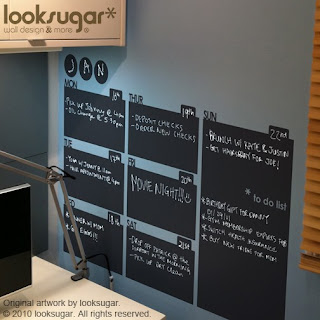
- Kids ready for school
- Coffee
- Email
- Writing
- Correspondence

Transition: Breakfast

Late Morning:
Package orders
Work on outstanding orders
Clean work spaces
Inventory supplies
Order supplies
Outside cutting and other outside work (spring/summer)

Transition: Lunch
Early Afternoon:
Create new product
Prep materials for product
Outside cutting and other outside work (fall/winter)

Transition: afternoon snack, children arriving home

Evening:
Correspondence
News
Networking
New product brainstorming
Sourcing new supplies

As you can see, there are not specific activities in my routine. However, most activities that I do will fall into one of these time frames, so on a daily basis I can extend the times I work in each block if needed. There are also times when naturally one activity will require more time and I allow myself to adjust as necessary.

Because my transitions are around things that are done daily, no matter what, it is easy for me to follow the cues of when it is time to change directions so that days are not too heavy in one area versus another.

If you are still having a hard time being productive, then make a list of general things that you can do and which category they fit in. This will help prevent the feeling of "I don't really feel like doing that today ... what else can I do?"

My secondary list looks something like this:
Early Morning
Tweet
Facebook
Pinterest
Visit groups

Late Morning/Afternoon
Create target for readiness for shows/shop
Work on things already prepped
Cut fabric and felt
Photograph
when all else fails - clean house

Afternoon/Evening
Look for advertising opportunities
paper folding
meal planning
shopping lists

Please note that I may not do everything on my routine each day, and it changes based on upcoming events and outstanding orders. However, by writing down and mapping out my days I have allowed myself to think about what I do best at what time of day. I have also been able to get ahead with things that I was behind on. Especially writing, because since it isn't usually the most pressing thing on my list, then I would put it off to get the more pressing things done first. Which usually left me writing at the end of the day when I felt drained and not inspired. By giving myself permission to write early in the morning I am able to maximize the time of day when I do it best and that usually motivates me to perform the tasks later in my day even better.

I'm not sure what I will talk about next week! Please leave a comment to tell me what time management issues you are having!

Friday, September 23, 2011

Tuesday, September 20, 2011

Time Management - Working in Batches, Small Runs, and one at a time


Most of you know that your business runs more efficiently when you work in batches. By focusing on one or a few tasks you can reduce the amount of time it takes to complete a project since you are not wasting time looking for tools, switching areas, cleaning off work spaces in order to make room for a different task. You also may save money by preventing the wasting of glues, paints, paper, and inks. However, you do need to know your limits before going assembly line crazy!

This is especially important when you are building up stock for a show or busy season. You don't want the show to come along and have a bunch of half-finished product, and you also don't want your holiday rush to hit and not have time to finish products. So know how long it takes you to make items by working on them one at a time, and also how quickly you can make items in batches.

If you only make one type of item, then get real and know exactly how many items you can make in a 1 week time frame. Remember, that photographing them, listing them for sale, and preparing them to be shipped is also part of this time!

If you make several types of items try to find efficiencies between those items. Perhaps you use the same tool in both items - so try to coordinate your time so that you are using that tool for both types of items at one time. You may also find that you can prep items for multiple items at the same time that are made from the same materials.

You may also try to make your work space more efficient. You may set up stations for doing certain tasks - have all of your supplies and tools stored that you use for each task and store them at that station. If you only have limited space try to arrange your tools and supplies in the order that you use them.

Discovering your limits is very important, and can also be very helpful when pricing your items too. The best way to test your limits is to have an idea of how many items that you think that you would be able to make in 1 week, or 2 weeks and then do it. However, not only do you need to make the items, you also need to photograph them, list them for sale, and package them up. It is only when you pretend that you are selling that many items that you actually know how many you can sell in a given period of time.

Be mindful of how many of a particular item that you sell also. You need to spend more time making the things that you sell regularly, but don't forget that a small amount of stock of the items you don't frequently sell could be the reason that you don't frequently sell them!

Next week I will be talking about setting up your schedule.

Thursday, September 15, 2011

Early Fall Favorites


{1 - Lightning Bolt Stud Earrings from TheAngryWeather, 2 - Mid Century Print Vintage Skirt from DeLaBelle, 3 - Ceramic Fawn Figurine from BarkingBirds, 4 - Papillion de Nuit print from reneeanne, 5 - Mini Feather Pouch from MilkandHoneyHandbags}

Tuesday, September 13, 2011

Time Management - Creating Expectations

Now, you may think this is an odd topic for a time management post, but keep reading and you may understand.

I used to go to a restaurant once a week for really good Chinese food. I would always take my son, because he loved the food and trying to eat with chopsticks. Now, it was a little pricey, but the helpings were large so I was always sure to have enough left over for lunch the next day. One week we went there for dinner, and the helpings were really small. I commented to the person serving me that normally they gave us a much bigger scoop. The server commented back that they had been making a mistake before, and these were the correct proportions. I was very disappointed, and after that experience my son and I found a recipe, bought some chopsticks, and started eating our weekly Chinese dinner at home instead of at the restaurant. We have gone back a couple times in the last year, but we are no longer regular weekly customers and we have also turned the rest of the family onto our yummy homemade Chinese dinner.

My point here is that this restaurant created an expectation for me, and then changed. My opinion isn't a bad one of the restaurant, but because of their drastic change in portion sizes I no longer visit the store as a weekly customer.

From a business and time management perspective, I am here to tell you that YOU create expectations for your customers. You create these expectations in your descriptions, prices, policies, words and actions. You have the ultimate control over how your customers perceive your customer service and product. You need to set your business up with systems that are manageable for the long term and account for busy times, slow times, growth, and rising supply costs. You don't want your regular customers to visit your shop not knowing what to expect this time. You want your regular customers to know exactly what they can expect based on their experiences with you, and you want to set up systems that you can maintain.

From a time management perspective this means setting up times to respond to customers - will you respond to them in 2 hours, 6 hours, 12 hours, 24 hours, 48 hours? Set a schedule that you can conform to on your busy times, however perhaps not your extremely busy times. You may state that you will respond to people in 24-48 hours and the 24 hour mark is what you do in normal and busy times, but the 48 hours is what you do when you are extremely busy. Put these times in your policies, and also tell people when you will respond back to the with answers to questions and quotes that are not immediately available. Then - stick to it! If you are constantly late, then consider extending the time that you give yourself. However, you also don't want to be consistently very early either. You don't want your customers used to you responding to them in breakneck speed and then all of a sudden they don't hear from you for 2 days without some sort of announcement that you are out of town.

Set up appropriate times to complete orders and shipping ready-made orders. When you do this give yourself a buffer to account for bad weather, a sick day now and then, and also things that come up in life. You don't want to be cutting it so close to deadlines that you are constantly having to tell your customer that you missed a deadline that you ultimately set for yourself. You also don't want to be always sending orders days ahead of schedule and it to feel like you are late when an order is sent out on time.

Scheduling realistic times and deadlines for yourself can help you plan custom orders into your regular order routine, save time by consolidating like tasks, and to give you and your customers a solid system to expect for the long term. So, be nice to yourself, give yourself the time that you need to complete your orders and communications without being in a time crunch constantly.

Next week I will be writing about working in batches, small runs, and one at a time.